Description
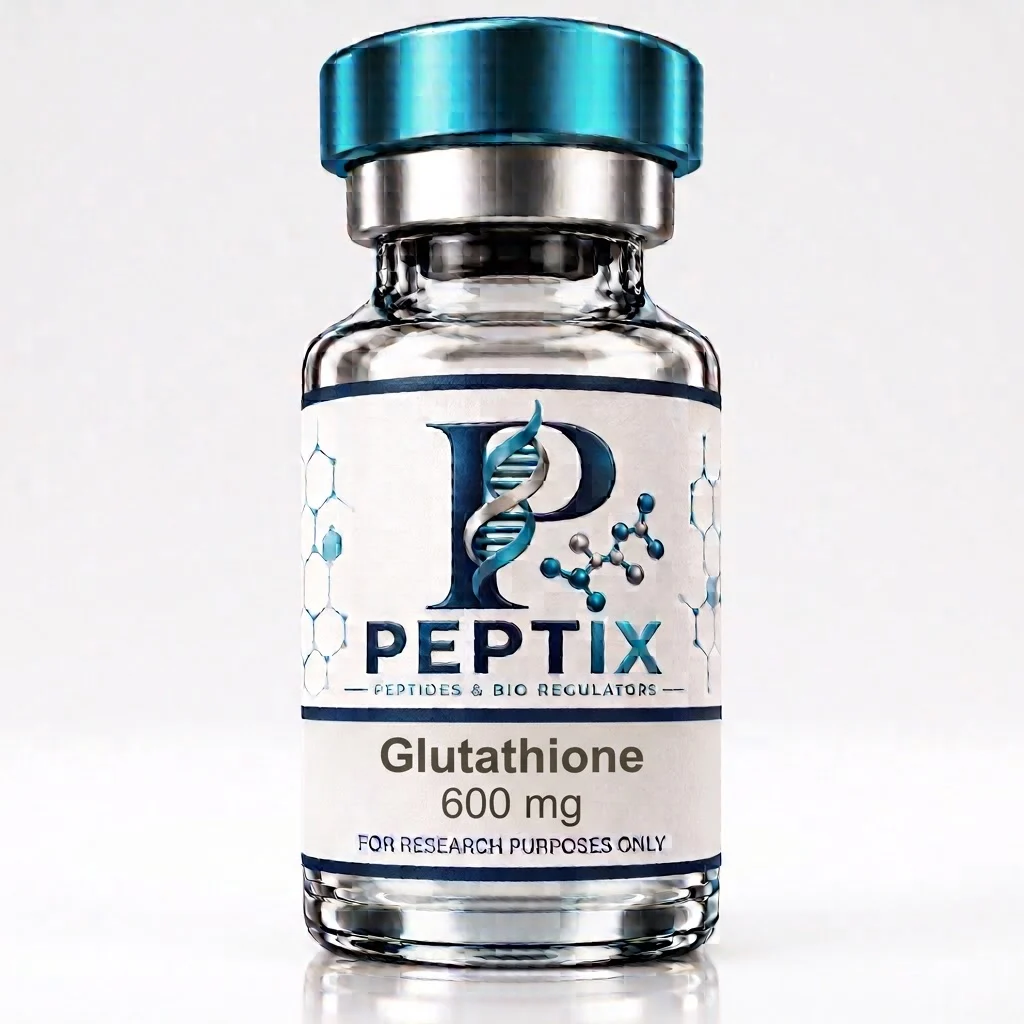
Glutathione
Synonyms / Designations: L-Glutathione, Reduced Glutathione, GSH, γ-L-Glutamyl-L-cysteinylglycine
CAS Number: 70-18-8
Molecular Formula: C10H17N3O6S
Molecular Weight: 307.32 g/mol
Chemical Classification: Naturally occurring tripeptide; intracellular antioxidant
Purity: Conforms to internal specification
Appearance: Clear liquid
Pack Size: 10ml
Storage: Best stored frozen. Discard 30 DAYS after opening.
Description & Mechanism
L-Glutathione is a naturally occurring tripeptide composed of glutamic acid, cysteine, and glycine. It is ubiquitously present in mammalian cells and plays a central role in redox balance, cellular detoxification processes, and maintenance of intracellular thiol status.
In biochemical and cellular research systems, L-glutathione is widely used as a reference compound for studying oxidative stress, redox signalling, enzymatic detoxification pathways, and glutathione-dependent enzyme activity. Experimental investigations commonly focus on its interaction with glutathione peroxidases, glutathione S-transferases, and redox-sensitive signalling proteins. Observed effects are dependent on concentration, cellular context, and experimental design, and are used to investigate molecular mechanisms rather than defined physiological outcomes.
Applications in Research
• Redox biology and oxidative stress studies
• Investigation of antioxidant defence mechanisms
• Enzymatic assays involving glutathione-dependent enzymes
• Cellular detoxification and thiol metabolism research
• Reference standard for antioxidant and redox-active compounds
Handling & Stability
- Best stored frozen. Discard 30 DAYS after opening.
Specifications Summary
Purity: Conforms to internal specification
Appearance: Clear liquid
Molecular Weight: 307.32 g/mol
Chemical Type: Tripeptide antioxidant
Solubility: Water
Storage: Best stored frozen. Discard 30 DAYS after opening.
Pack Size: 10ml
Precautions & Notes
• L-Glutathione is readily oxidised to glutathione disulfide (GSSG)
• Buffer composition and pH may influence stability and redox state
• Appropriate controls are recommended when studying redox-sensitive systems
• Intended strictly for laboratory research use; not for human or veterinary application
References
Larsen P.J. et al. Amylin receptor agonism and metabolic regulation. Diabetologia.
https://pubmed.ncbi.nlm.nih.gov/36242844/
Gydesen S. et al. Cagrilintide, a long-acting amylin analogue: pharmacology and receptor activity. Diabetes, Obesity and Metabolism.
https://pubmed.ncbi.nlm.nih.gov/33502015/
Hay D.L., Poyner D.R. Amylin and calcitonin receptor signalling mechanisms. British Journal of Pharmacology.
https://pmc.ncbi.nlm.nih.gov/articles/PMC5740251/
Novo Nordisk. Scientific communications and research information on AM833 (cagrilintide).
https://sciencehub.novonordisk.com/search?query=cagrilintide
Keywords: L-Glutathione, Reduced Glutathione, GSH, Tripeptide Antioxidant, Redox Biology, Oxidative Stress Research Detoxification